
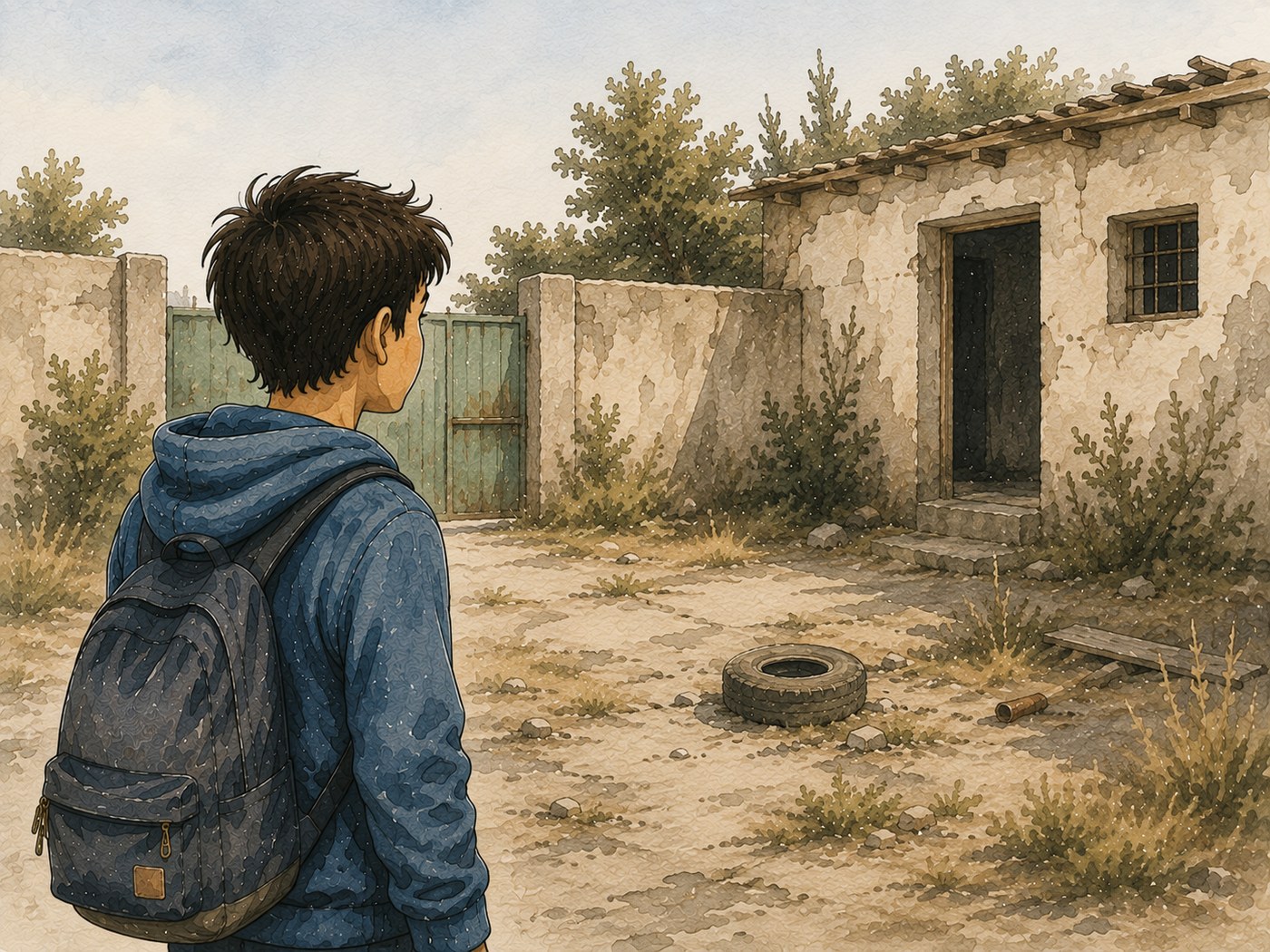
Many parents hesitate to talk with their children about explosive remnants for fear of frightening them. Experience says the opposite: the child who does not know the rule is the most exposed, and the child who knows it calmly acts with confidence rather than panic.
Start early, in short sentences
From the age of four or five, a child can memorise three words: stop, move away, tell. You do not need to explain what the object is or why it is dangerous. The rule is enough.
Talk about places, not objects
"We do not enter abandoned houses" is easier for a child than describing an object they could not identify anyway. It is also safer, because it does not push the child to try to recognise what they see.
Make it a habit, not an event
Do not sit your child down for one long talk about danger. Mention the rule in passing and often: leaving the house, walking past a damaged building, playing in the street. Calm repetition is what builds an automatic response.
Watch your unspoken language
A child reads your tone more than your words. If you speak while anxious, they will absorb the anxiety, not the information. Use the same tone you use to explain crossing the road.
Keep the door to telling open
Say it plainly: "If you see something strange, come and tell me — I will never be angry with you." A child who fears punishment may hide what they saw, or worse, go back to it alone. Make telling always safe.
Watch for the scrap-metal incentive
In some communities children collect metal to sell. This is among the most dangerous behaviours of all. Talk about it directly, and if income is the real driver, look for an alternative with the family.
If your child has been through an incident
Children who witnessed an incident or lost someone need support beyond a safety message. Do not handle it alone — reach out to a provider of specialised psychosocial support.