
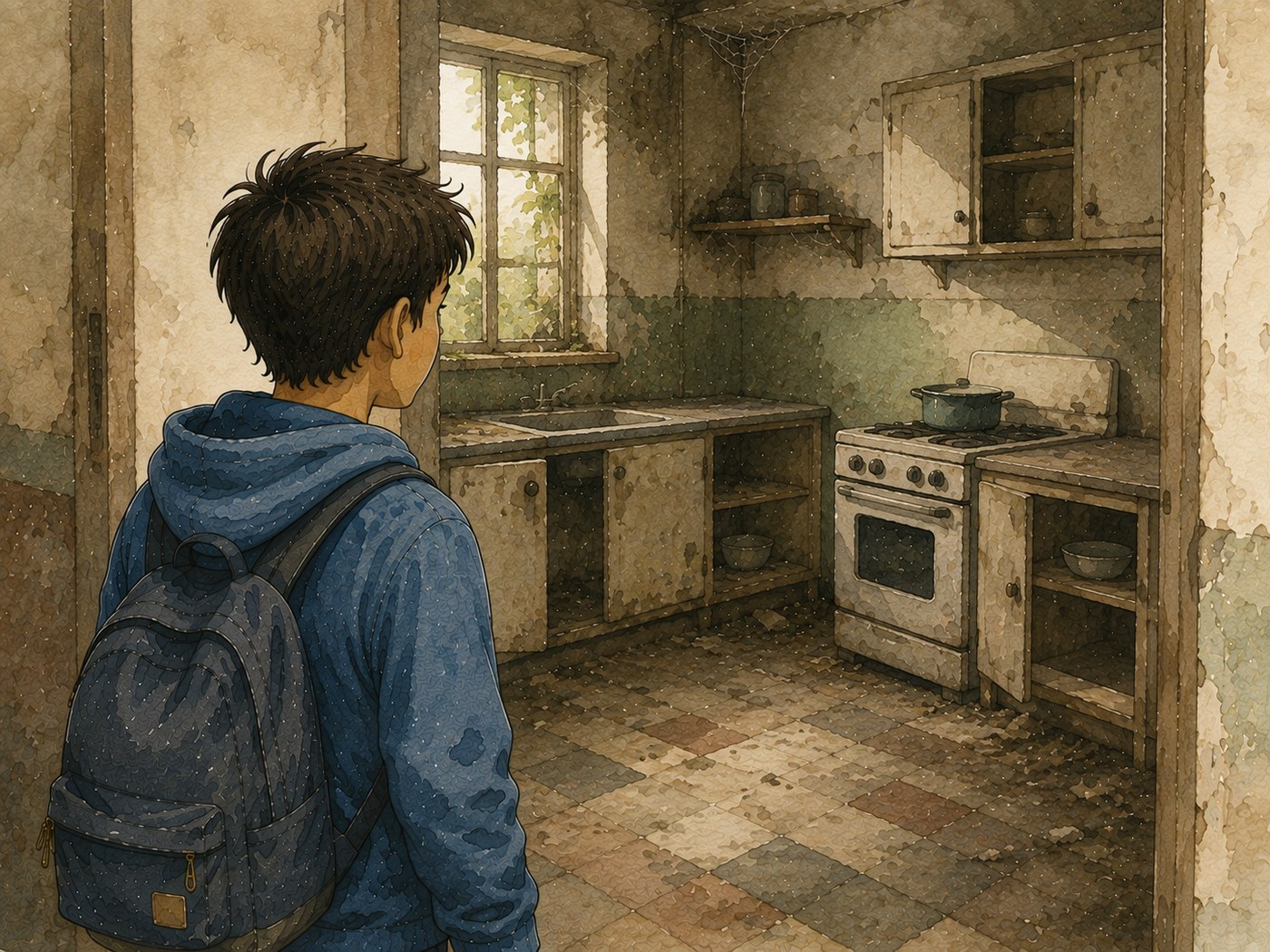
In areas affected by conflict, explosive remnants can stay in the ground, in buildings and along roads for years after the fighting stops. Families do not need technical knowledge about these remnants. They need one clear rule that can be memorised and applied immediately.
The rule
Stop. Do not take another step. Stand still.
Do not touch. Do not touch the object, move it, kick it, throw stones at it, or try to carry, bury or burn it.
Move away. Go back exactly the way you came, step by step. Do not take a new route.
Tell. Inform a trusted adult or the responsible authority in your area, and describe the location as precisely as you can.
Why this rule
Because it requires no identification, no expertise and no judgement. A child who sees something unfamiliar does not need to work out what it is. The child only needs to stay away and tell someone. That is exactly what the rule does: it removes the need for judgement at a moment when a mistake cannot be afforded.
What must never be done
Do not collect scrap metal from damaged land or buildings, and do not allow children to do so whatever the incentive. Do not light fires on ground that has not been cleared. And never try to make an area safer by moving a suspicious object away — moving is the most dangerous thing that can be done.
Teach it the way you teach crossing the road
Children learn short, repeated rules, not long lectures. Repeat the three words at home, on the road and in the classroom, calmly and without frightening them. The goal is an automatic response, not a fear that stops a child from playing or going to school.
This article is general awareness only. It does not — and must not — contain any information about handling explosive remnants. Handling them is technical work carried out exclusively by specialised teams.